Camp lighting: lumens, colour temperature and not annoying your neighbours
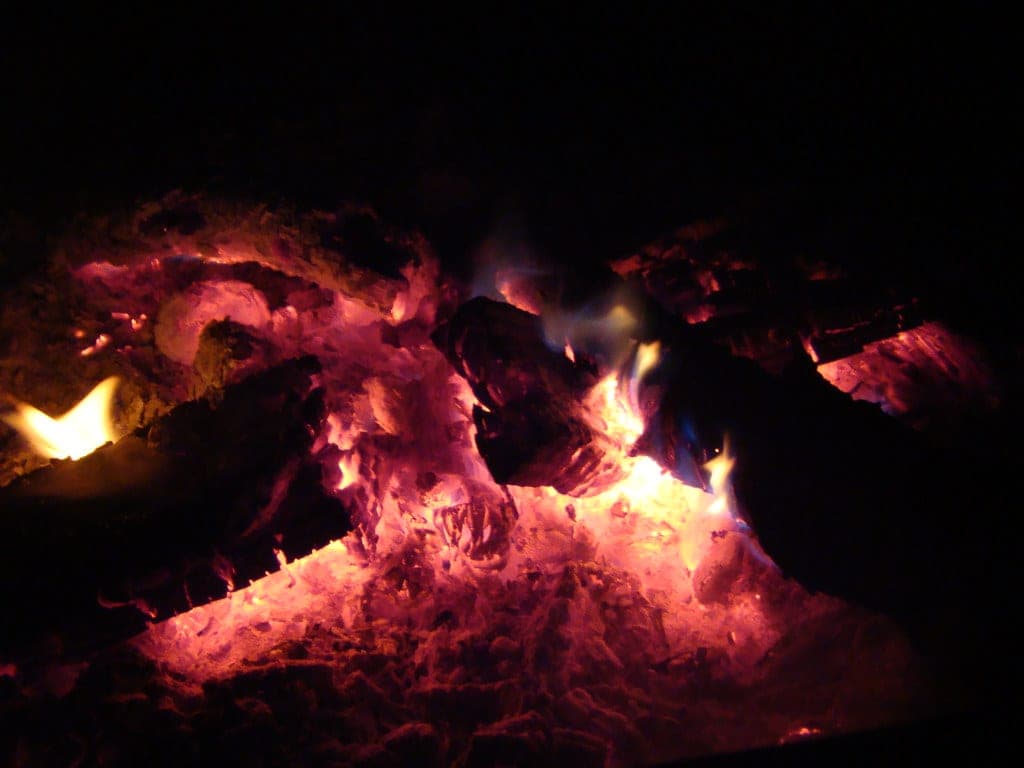
Photo by VasenkaPhotography · flickr · CC BY 2.0
- Section
- Gear
- Category
- Camp setup
- Read
- 5 min
- Updated
- 27 Aug 2026
How much light you actually need, why warm light beats bright light at camp, and the reason amber matters more than anything else after dark.
Lighting is the cheapest part of a camp setup to get right and one of the easiest to get wrong, mostly by buying far too much of it.
The lumen mistake
Marketing sells brightness, and brightness is not the useful property at camp.
Rough figures for what is actually needed:
| Task | Sensible output |
|---|---|
| Head torch, general use | 100 to 200 lumens |
| Camp table and cooking | 100 to 300 lumens |
| Whole campsite ambient | 300 to 600 lumens |
| Finding something at distance | 500+ on a spot beam, briefly |
A 1,000 lumen floodlight aimed at a camp table does not make the table easier to see. It creates glare, throws hard shadows, wrecks your night vision so everything outside the pool of light becomes invisible, and lights up the campsite next door.
More useful than raw output is diffusion. A moderate light spread across a strip or through a frosted diffuser is far more pleasant than a bright point source, because it fills shadows instead of cutting them.
Colour temperature
Measured in kelvin, and it changes the experience more than brightness does.
Warm white, roughly 2700K to 3500K, is what you want for anything you sit around for hours. It is easier on the eyes, preserves night vision better and simply feels like being at camp rather than in a workshop.
Cool white, 5000K and up, is harsh. It has its uses for a task light when you need to see detail, and it is unpleasant as general camp lighting.
Amber is the one worth understanding properly, because it solves a specific Australian problem.
Why amber matters
Insects navigate using short-wavelength light. Blue and ultraviolet attract them strongly; longer wavelengths attract far fewer.
A cool white light at camp on a warm evening becomes an insect magnet within minutes. Switch to amber and the difference is immediate and dramatic. It is not a complete solution, but it is the single most effective thing you can do about moths and bugs around a camp table, and it costs nothing once the light has the mode.
This is why almost every decent 12V camp light strip sold in Australia includes an amber option. Use it.
The secondary benefit is night vision. Amber preserves dark adaptation far better than white, so stepping away from the table does not leave you blind.
The lights worth owning
A head torch each. This is the most used light in any camp and the one people most often have only one of. It points where you look, leaves both hands free, and handles cooking, rummaging and the walk to the toilet at 2am.
Look for a red mode, which preserves night vision and does not blind whoever you are talking to. Look for a lock function, because a head torch that switches itself on in a bag arrives flat. And consider where the battery is: rechargeable is convenient, and a model that also takes standard cells is a better bet a long way from a charger.
A 12V light strip or bar. The workhorse of camp lighting. Runs off the auxiliary battery, draws almost nothing, and lights the working area. Magnetic mounts and hooks make placement easy. Amber mode, as above.
A lantern. Useful because it stands anywhere, works inside a tent or swag, and does not need a 12V lead run to it. A rechargeable LED lantern with a warm diffuse output is worth the space.
One bright torch. Not for general use, but for the times you genuinely need to see something a long way off: an animal in the scrub, a gate, checking a water crossing. It lives in the door pocket and gets used rarely.
What you do not need is a light bar on the roof for camp purposes. Driving lights are a different thing for a different job, and using them at camp is a reliable way to annoy everyone within several hundred metres.
Power
Lighting is a small load. A typical LED strip pulls well under an amp, so several hours a night is a minor line item against a battery budget dominated by the fridge.
That means lighting is rarely worth optimising for power. Buy the light that is pleasant to sit under. The system sizing that actually matters is in dual battery and 12V systems and 12V fridges.
Where power does matter is rechargeables. Head torches and lanterns that charge by USB are convenient right up until several days without driving, so a 12V USB outlet on the auxiliary circuit is worth having.
Camp etiquette after dark
Worth stating because it is the most common friction between neighbouring campers.
Point lights down and inward. A light aimed outward from your site is aimed into someone else's.
Kill the floodlight once camp is set up. Setting up in the dark warrants brightness. Sitting around afterwards does not.
Head torches at face height blind people. Tilt down when talking to someone, or use the red mode.
Fairy lights and strings are popular and fine when they are warm and low output. A hundred cool-white LEDs strung around an awning at a quiet bush camp is a different matter.
The general principle is that most people at a bush camp came for the dark. Dark skies are a large part of the appeal of camping in Australia, and it takes surprisingly little light to remove them for everyone nearby.
The short version
Buy less brightness than you think, in warm or amber, spread out rather than concentrated. One head torch per person. Use amber when the insects arrive. Point everything down, and turn the bright one off once the camp is up.
The rest of the camp setup is in building a camp kitchen you will actually use.
Common questions
- How many lumens do you need for camping?
- Far fewer than people buy. Around 100 to 300 lumens lights a camp table comfortably, and 300 to 600 covers a whole campsite. A head torch of 100 to 200 lumens handles almost every task. Very high output floods a small area with glare, destroys your night vision and irritates everyone camped nearby.
- Why do camp lights come in amber?
- Insects are drawn to short-wavelength light, meaning blue and ultraviolet. Amber and warm white emit far less of it, so an amber light attracts noticeably fewer moths and bugs. Amber also preserves night vision better than cool white, which is why most decent camp light strips include an amber mode.
- What colour temperature is best for camp lighting?
- Warm, roughly 2700K to 3500K. Cool white above 5000K is harsh, creates glare, kills night vision and attracts more insects. Warm light is easier to be around for hours, which matters more at camp than raw brightness does.
- How much power does camp lighting use?
- Very little compared with a fridge. A typical LED light strip draws well under an amp, so a few hours a night is a small fraction of a day's battery budget. Lighting is rarely the thing that flattens a battery; the fridge almost always is.
- Do you need a head torch if you have camp lights?
- Yes. A head torch is the one light that points where you are looking and leaves both hands free, which matters for cooking, finding things in a drawer, and getting up at night. It is the single most used light in any camp, and one per person is the right number.
Related
Gear4 min read
12V fridges: sizing, running costs and what actually matters
Compressor versus thermoelectric, how much power one really draws, and why the fridge decides the rest of your electrical system.
 Gear
5 min read
Camping mattresses: R-value, thickness and what actually keeps you warm
Self-inflating, air and foam compared, why the insulation number matters more than the thickness, and how Australian conditions change the answer.
 Gear
5 min read
Swags: what they are, and how to choose one
The canvas bedroll that defines Australian camping. What separates a single from a double, why stretcher models exist, and what actually matters when you buy.