Camping mattresses: R-value, thickness and what actually keeps you warm
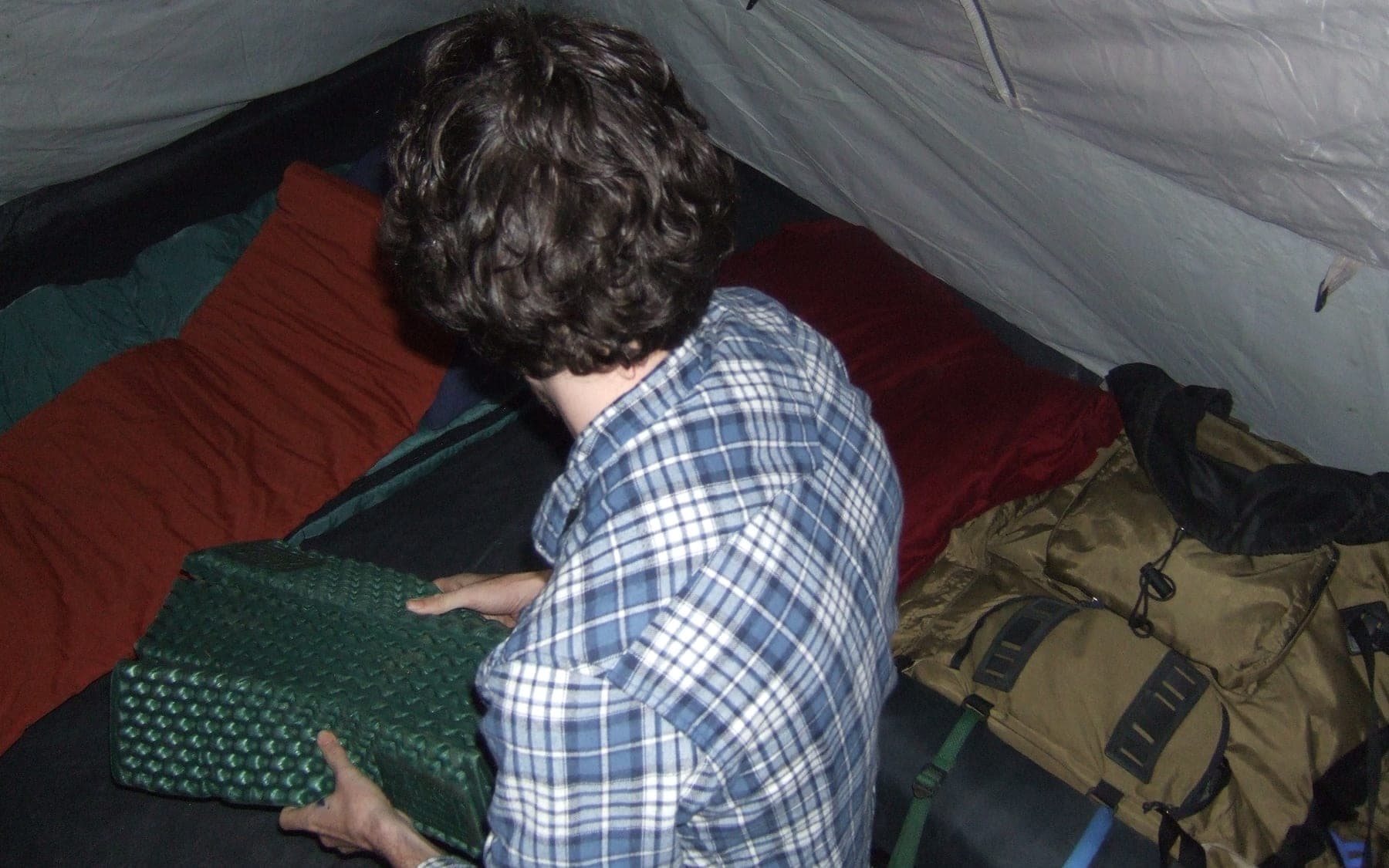
Photo by Mike Burns · Wikimedia Commons · CC BY-SA 2.0
- Section
- Gear
- Category
- Camp setup
- Read
- 5 min
- Updated
- 27 Aug 2026
Self-inflating, air and foam compared, why the insulation number matters more than the thickness, and how Australian conditions change the answer.
The mattress is the part of a sleep system that people spend the least time on and lose the most sleep to. Almost every complaint about being cold at night in Australia traces back to what is underneath the sleeper rather than what is over them.
The physics, briefly
There are two ways your body loses heat while you sleep, and they are not equal.
Convection carries heat away into the air around you. That is what a sleeping bag deals with, and it is the part everyone plans for.
Conduction moves heat directly into whatever you are touching. Ground is dense, it is usually colder than the air, and it is in contact with a large part of your body all night. Conduction moves heat out of you far faster than convection does.
This is why a good sleeping bag on bare ground is cold and a modest bag on a well-insulated mat is warm. It is also why the mattress deserves at least as much attention as the bag.
R-value is the number that matters
R-value measures resistance to heat flow. Higher is warmer, and the scale is roughly linear, so an R-4 mat is about twice as insulating as an R-2.
Since 2020 there has been a standardised test, ASTM F3340, which means R-values from different manufacturers are now genuinely comparable. Before that, brands tested however they liked. Any mat quoting a standardised figure is telling you something meaningful.
Rough guidance for Australian conditions:
| R-value | Suitable for |
|---|---|
| Under 2 | Coastal summer only |
| 2 to 3.5 | Three-season, mild nights, most of the year on the coast |
| 3.5 to 5 | Inland winter, high country, cold nights |
| 5 and above | Alpine, snow, genuine cold |
R-values stack. Two mats laid together add up approximately, which is a cheap way to extend a summer mat into winter and is worth knowing before buying a second mattress.
Thickness is not warmth
This is the mistake worth spelling out, because the marketing encourages it.
A 200mm uninsulated air mattress, the kind sold for guest rooms, is a large volume of air with nothing stopping it circulating. Your body warms the air near the top, that air moves, cold air from the ground side replaces it, and the mattress works as a convection loop that draws heat out of you all night. People describe these as freezing, and they are right.
A 25mm closed-cell foam mat is thin, hard and warmer.
Thickness buys comfort, particularly for side sleepers and anyone with hips and shoulders that dig in. Insulation buys warmth. They are different properties and you need to check both.
The three types
Self-inflating mats contain open-cell foam bonded inside an airtight shell. Open the valve, the foam expands and draws air in, then you top it up by mouth and close it.
They are the sensible default for vehicle-based camping. The foam provides genuine insulation, they are comfortable, and a slow leak degrades performance rather than ending it: you can still sleep on a partly deflated self-inflater, which is not true of an air mattress.
The trade is bulk and weight. They do not pack as small as an air mat.
Air mats, meaning proper insulated camping air mattresses rather than guest-room airbeds, use internal baffles and often a reflective layer or synthetic fill to control convection. Modern ones achieve high R-values at very low weight and pack down small.
They are excellent and they are less forgiving. A puncture is a real problem, so a repair kit is not optional, and some designs are noisy to move on.
Closed-cell foam is a sheet of dense foam that folds or rolls. It cannot puncture, it costs very little, it never fails, and it is the least comfortable option.
Its best use in vehicle camping is as a second layer under something else, adding R-value and protecting the mat above it from sticks and stones.
What Australian conditions actually demand
The temperature swing inland is the thing people underestimate, repeatedly.
A day in the high twenties in the Red Centre or the Pilbara can be followed by a night at or below zero. Clear desert skies radiate heat away fast once the sun goes, and the ground cools with them. People arrive dressed for the drive and packed for the daytime, and spend the night cold.
If you are camping inland, particularly through winter, treat R-value as the specification that matters and buy up rather than down.
On the coast in summer the problem reverses and a high R-value mat can be uncomfortably warm, which is a real argument for owning two mats rather than one compromise.
Mattresses in swags
Most swags include a foam mattress in the 50 to 70mm range. It is comfort foam, and its insulating value is modest.
Putting a self-inflating mat inside the swag underneath you is the single most effective cold-weather upgrade available, and it costs far less than a better sleeping bag. This is covered further in swags: what they are, and how to choose one.
Looking after them
Store self-inflating mats unrolled with the valve open. Long-term compression breaks down the foam and the mat stops self-inflating properly. Under a bed is the standard answer.
Do not inflate by mouth if you can avoid it, on any mat with foam inside. Moisture from your breath ends up in the foam and eventually grows mould you cannot reach. A pump sack costs little.
Carry a repair kit and know where it is. A puncture at nine at night is a five-minute job with a patch and a very long night without one.
Choosing
- Decide the coldest ground you will realistically sleep on.
- Pick R-value for that, then thickness for comfort.
- Buy self-inflating for vehicle camping unless weight genuinely matters.
- Add a foam mat underneath if you want more warmth cheaply.
The wider comparison of sleeping setups is in rooftop tents, swags and ground tents compared.
Common questions
- What is R-value on a camping mattress?
- R-value measures how well a mattress resists heat passing through it. Higher is warmer. It is the single most useful number when comparing mats, because it describes insulation rather than comfort. Roughly, under 2 is summer only, 2 to 4 covers most three-season camping, and 4 and above is needed for genuinely cold nights.
- Does a thicker camping mattress mean a warmer one?
- No, and this is the most common misunderstanding. Thickness is comfort; R-value is warmth. A thick uninsulated air mattress can be colder than a thin foam mat, because the air inside circulates and carries your body heat to the cold ground. Check the R-value, not the millimetres.
- What R-value do I need for camping in Australia?
- For coastal summer camping, an R-value around 2 is generally enough. For inland and winter camping, aim for 4 or higher. Inland Australia swings hard: a warm day in the Red Centre can be followed by a night below zero, and the ground is what takes your heat.
- Are self-inflating mats better than air mattresses?
- For most vehicle-based camping, yes. Self-inflating mats contain open-cell foam that provides real insulation and keeps working at reduced pressure if they develop a slow leak. Uninsulated air mattresses are comfortable and cheap but are poor insulators and fail completely when punctured.
- Can you put a camping mattress inside a swag?
- Yes, and in cold conditions it is the single most effective upgrade. The foam mattress that comes in most swags is typically 50 to 70mm of comfort foam with little insulating value. Adding a self-inflating mat with a real R-value underneath does more for a cold night than a warmer sleeping bag will.
Related
 Gear
5 min read
Swags: what they are, and how to choose one
The canvas bedroll that defines Australian camping. What separates a single from a double, why stretcher models exist, and what actually matters when you buy.
 Gear
5 min read
Camp lighting: lumens, colour temperature and not annoying your neighbours
How much light you actually need, why warm light beats bright light at camp, and the reason amber matters more than anything else after dark.
Gear4 min read
Rooftop tents, swags and ground tents compared
Three ways to sleep in the bush, each with a real cost that the marketing tends to skip.