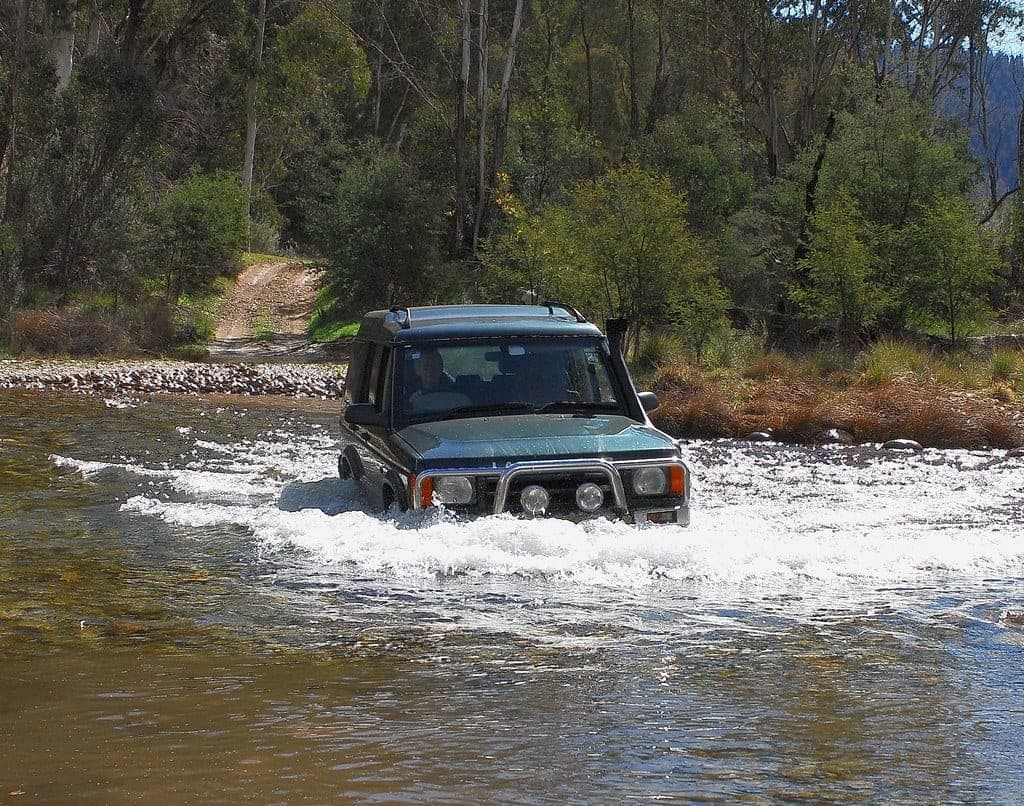
The recovery kit that earns its space
Photo by Jack Heywood Photography · flickr · CC PDM 1.0
- Section
- Gear
- Category
- Recovery
- Read
- 4 min
- Updated
- 10 Aug 2026
What to carry, what to leave behind, and the two items that hurt people every year.
Most recoveries are not dramatic. Someone loses momentum in soft sand, digs in slightly, and gets out with a shovel, lower tyre pressures and a set of boards. The kit that handles that is small and cheap.
The dramatic gear is for the small remainder, and it is also the gear that injures people.
Start here
A shovel. The single most used recovery tool. Clearing sand from in front of the tyres and knocking down the ramp you have dug for yourself resolves a large share of bogs on its own. A proper long-handled shovel, not a folding entrenching tool.
Recovery boards. A pair of textured boards wedged under the driving wheels to give a surface to climb onto. They work extremely well in sand and mud, they are simple, and nothing about them is under tension, which makes them the safest thing in the kit.
Two is the common compromise. Four is better on a heavy vehicle in deep sand.
A compressor and a gauge. Airing down is a recovery technique in its own right and it prevents more bogs than anything else. Covered properly in tyre pressures for sand, gravel and rock.
Gloves. Winch cable and old strap webbing both shred hands.
Rated recovery points. Not part of the kit as such, but the thing everything else depends on. A tie-down lug used for securing the vehicle to a ship is not a recovery point, and using one as an anchor for a snatch recovery is how the projectile stories start. Know where your rated points are before you need them.
The gear that needs respect
Snatch straps store energy by design. They stretch under load and return it, which is what pulls a stuck vehicle out. That stored energy is also what turns a failed component into a projectile.
The mechanism people underestimate: if a recovery point fails, or a shackle fails, or the strap itself fails, the strap does not simply drop. It contracts violently and throws whatever is attached to it. People have been killed by this, including bystanders standing well to the side.
The rules are not complicated:
- Rated recovery points at both ends. Never a tow ball, never a tie-down point.
- Correctly rated shackles, or better, soft shackles, which are lighter and far less dangerous if something lets go.
- A dampener over the middle of the strap.
- Everybody who is not driving well clear, and clear means further than feels necessary.
- Inspect the strap. Cuts, abrasion, stiffness and sun damage all reduce its rating invisibly.
Winches are the other high-consequence item. Slow, powerful, and dependent on a suitable anchor, which in a lot of Australian country simply is not there. Synthetic line has largely replaced steel for good reason: it is lighter, easier to handle, and it does not store the same energy, so a failure is much less violent.
If you carry a winch, carry a tree trunk protector and a snatch block, and know how to rig a double line pull.
What to leave at home
Most people's kits are heavier than they need to be, and the surplus is usually duplicated straps and shackles bought as a bundle.
The honest test for any item is whether you know how to use it under pressure. A winch you have never rigged, in a situation you have never practised, at dusk, with a rising tide, is not safety equipment. It is weight.
Practise before you need it
Recovery technique is not intuitive, and the moment to learn it is not while stuck. A weekend course, or an afternoon in a safe spot deliberately getting bogged and getting out, is worth more than any amount of gear.
The kit list
A reasonable touring kit:
- Long-handled shovel
- Two to four recovery boards
- Compressor, accurate gauge, deflator
- Snatch strap, rated for the vehicle
- Two soft shackles
- Strap dampener
- Gloves
- Tyre repair plug kit
- Rated recovery points fitted front and rear
That covers the overwhelming majority of situations a solo touring vehicle will meet.
Buy rated gear as a set rather than as loose items. Mixing an underrated shackle into an otherwise sound kit puts the failure point somewhere you did not choose, and the rating that matters is always the lowest one in the chain.
The most important item
Judgement. Almost every serious recovery starts with a decision to attempt something that should not have been attempted: a crossing that was too deep, a tide that was too far in, a climb late in the day with no turnaround.
Walking a crossing before driving it, and turning around while turning around is still easy, prevents more incidents than every piece of equipment above combined.
Related
Gear5 min read
Snatch straps: how they work and how they kill people
Kinetic recovery explained, the rated points and shackles it depends on, and why this is the one piece of gear that has to be treated seriously.
 Gear
5 min read
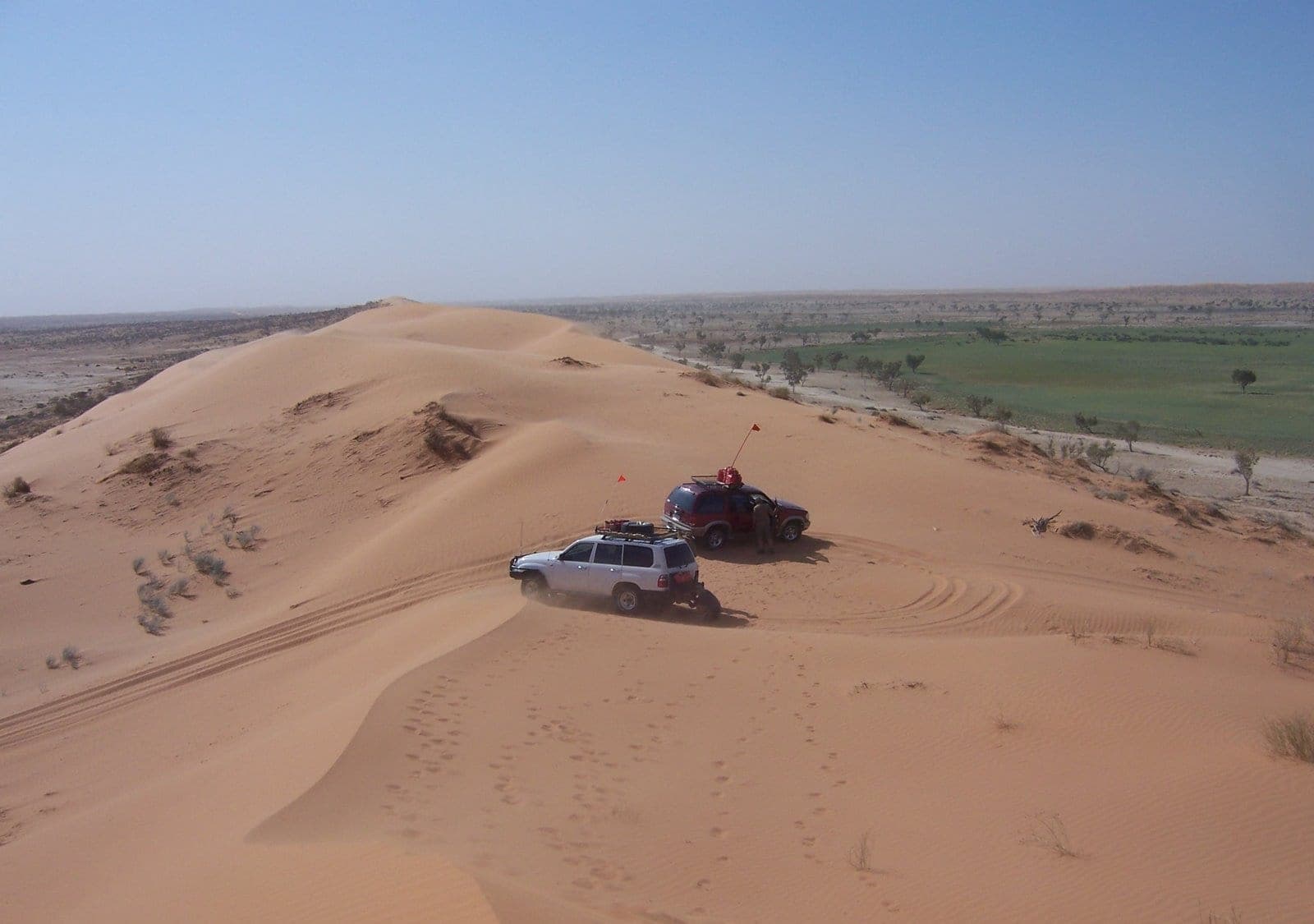
Recovery boards: how they work and how to use them properly
The safest recovery tool in the kit, why they fail when people get impatient, and what separates a board that lasts from one that shreds.
 Guides
5 min read
UHF radio channels in Australia: the ones that matter
Which channels are legally reserved, which ones convoys and road trains actually use, and why a UHF is not a substitute for a satellite messenger.