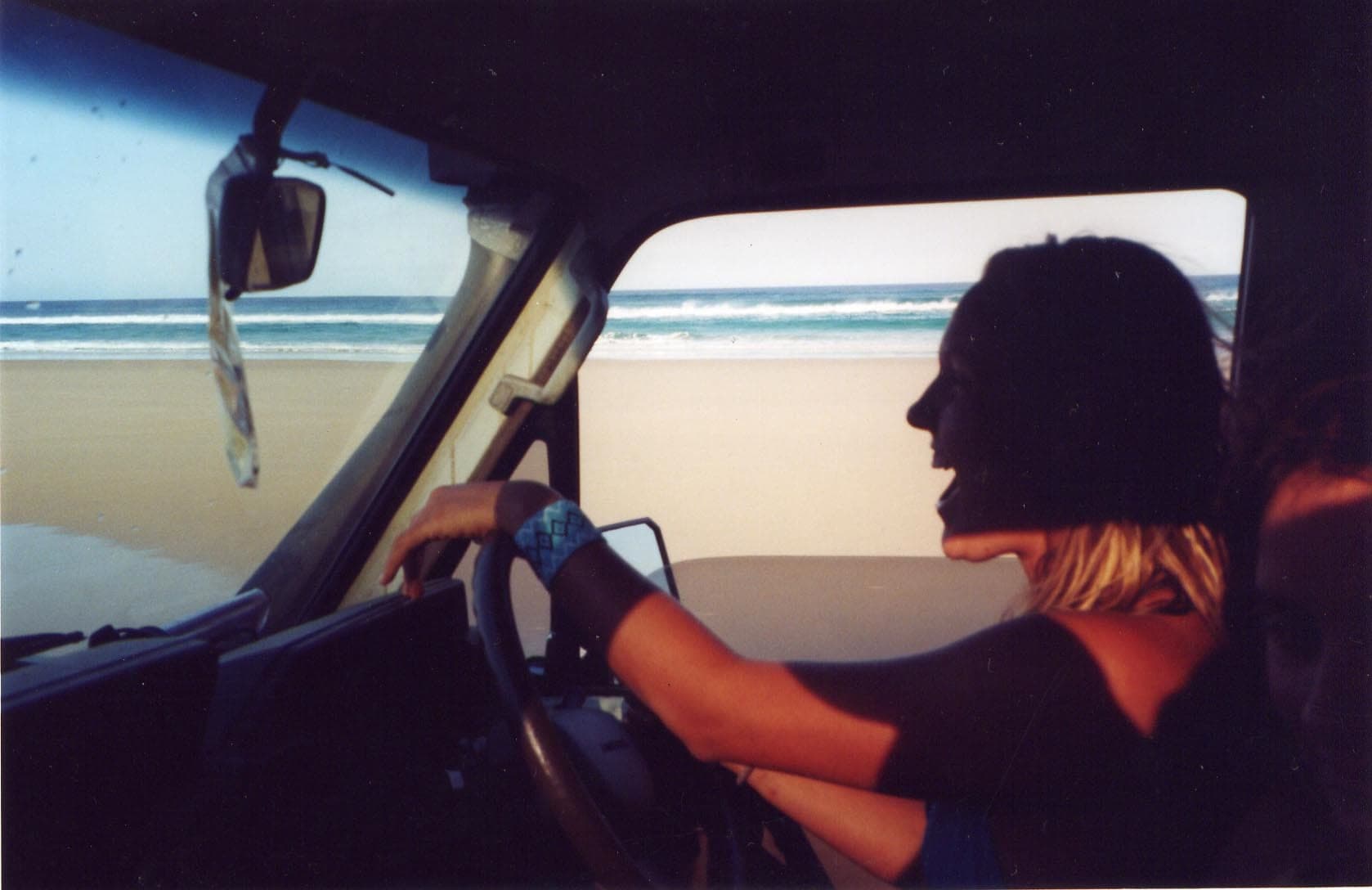
Beach driving: tides, pressures and salt water
Photo by 416style · flickr · CC BY 2.0
- Section
- Guides
- Category
- Technique
- Read
- 4 min
- Updated
- 27 Aug 2026
Why the tide timetable outranks everything else, what soft sand actually demands from a driver, and the washing-down step people skip.
Beach driving is the most accessible form of four-wheel driving in Australia and the one that costs people the most vehicles. Almost every serious incident traces back to a single decision about the tide.
The tide runs the day
Sand near the water is firm because it is damp and compacted. Sand higher up the beach is dry, loose and much harder to drive. The band of usable beach exists only when the tide is out.
The working guidance is a window of roughly two hours either side of low tide. Outside it, the firm strip narrows, the soft sand pushes you higher, and eventually there is no drivable beach at all.
Low tide moves about 50 minutes later each day. A window that worked at 9am today is not the window tomorrow.
Plan every day backwards from the tide table. Not from where you want to camp, not from when you want to leave. From the tide.
This matters because the failure mode is severe. A bogged vehicle on a rising tide, with soft sand on one side and water coming in on the other, becomes a salt-water write-off in a couple of hours. Recovery on a remote beach is slow and expensive, and insurers take a particular interest in whether the driver was inside a tide window.
Tyre pressures
Beach driving is about flotation, and flotation comes from a long contact patch.
Start somewhere around 50 to 60 percent of road pressure and adjust from there. Heavy vehicles and stiff tyres need to go lower. If the vehicle is ploughing rather than floating, more pressure is not the answer.
At low pressure the tyre responds slowly and the bead is more likely to unseat, so steering inputs need to be gentle and early. That is a technique change, not just a number change. The full detail is in tyre pressures for sand, gravel and rock.
Carry a compressor and air up before you touch bitumen. Every time. A soft tyre at highway speed builds heat until the sidewall fails, and that is the most preventable serious incident in touring.
Driving technique
Momentum, not speed. Steady progress in a gear that keeps the engine pulling without wheelspin. Speed on a beach is dangerous for other reasons anyway: soft patches, washouts, people and dogs.
No sharp inputs. Sudden acceleration digs, sudden braking builds a wall of sand in front of the tyre, and sharp steering at low pressure risks the bead.
Use existing tracks where they look sound. Compacted ruts are usually easier going than fresh sand.
Watch for washouts where creeks cut across the beach. They can be deep, and they are often invisible until you are close.
Look ahead at the sand colour. Darker sand is damper and firmer. A pale, dry-looking patch is soft.
Never stop on soft sand if you can avoid it. Starting again from a standstill in soft sand is much harder than keeping moving. If you must stop, do it on firm ground and point downhill or along your tracks.
If you get bogged
Stop immediately. The single biggest factor in how hard a recovery becomes is how long the driver kept trying.
Then: lower pressures further, dig out in front of each driving wheel, knock down the sand ramp behind them, wedge recovery boards hard under the tyres, and drive out gently. Once moving, keep going to firm ground before stopping to collect gear.
If the tide is coming in, that changes the calculation entirely. Get the vehicle moving toward higher ground first and worry about doing it neatly second.
Permits and rules
Most beaches where driving is permitted are gazetted, and many require a vehicle access permit arranged in advance. K'gari and the Cooloola coast both do, as covered in the K'gari destination entry.
Beaches that are not gazetted for vehicles are generally closed to them, and enforcement is real.
Where driving is permitted, the beach is usually a legal road: road rules apply, seatbelts apply, alcohol limits apply, and speed limits are posted and enforced.
Stay off the dunes. Dune vegetation holds the whole system together, it takes years to recover, and driving on it is both illegal and the fastest way to get a beach closed to vehicles.
Watch for nesting shorebirds, which nest above the high tide line on open sand and are almost impossible to see.
Salt water
This is the part people skip and pay for later.
Salt attacks a vehicle underbody aggressively, and by the time you can see the damage it is structural. Driving through the shallows or through salt spray coats everything underneath.
Wash it properly and wash it soon. Fresh water through the wheel arches, along the chassis rails, over the brakes, underneath the whole vehicle. Same day where possible. Many beach access points have a wash-down bay for exactly this reason.
Salt also finds its way into electrical connections, wheel bearings and brake components. A vehicle used regularly on beaches needs those checked more often than the service book suggests.
The short version
Plan from the tide table. Air down before you get on and up before you get off. Keep momentum, avoid sharp inputs, and stop the moment you lose traction rather than trying to power through. Get the permit. Stay off the dunes. Wash the salt off the same day.
Common questions
- What tyre pressure should you use for beach driving?
- Commonly around 50 to 60 percent of road pressure, though the right number depends on vehicle weight and tyre construction. Start conservative, drive, and drop further if the vehicle is still struggling. The aim is a long contact patch that floats on the sand rather than digging into it.
- When can you drive on the beach?
- Around low tide, and the usual working window is roughly two hours either side of it. Low tide shifts about 50 minutes later each day, so plan each day backwards from the tide table rather than from where you would like to be. A rising tide against a bogged vehicle is how cars end up in salt water.
- Do you need a permit to drive on a beach in Australia?
- Often, yes. Many gazetted beach driving areas require a vehicle access permit, and beaches on K'gari, the Cooloola coast and a number of NSW and WA beaches all have their own permit systems. Driving on a beach that is not gazetted for vehicles is generally prohibited and enforced.
- How do you get out of soft sand?
- Stop as soon as you lose momentum. Drop tyre pressures further, dig the sand out from in front of each driving wheel and knock down the ramp behind them, then wedge recovery boards hard under the tyres and drive out gently in a low gear. Wheelspin only digs you deeper.
- Do you need to wash your car after beach driving?
- Yes, thoroughly and soon. Salt water and salt spray attack a vehicle underbody aggressively, and the damage is not visible until it is expensive. Wash the underside, inside the wheel arches, the brakes and the chassis rails with fresh water on the same day if you can.
Related
 Guides
4 min read
What tyre pressure for sand, gravel and rock
What PSI to run for sand, corrugations and sharp rock, why the rock answer is the opposite of the sand answer, and what airing down actually costs you.
DestinationsQLD · 4WD
K'gari
The largest sand island on earth, where every road is a beach or a sand track and the tide timetable decides your day.
 Guides
5 min read
Finding 4WD tracks: where they are and how to read them before you drive
How track classification works, who manages what, and the assessment habits that separate a good day out from an expensive recovery.