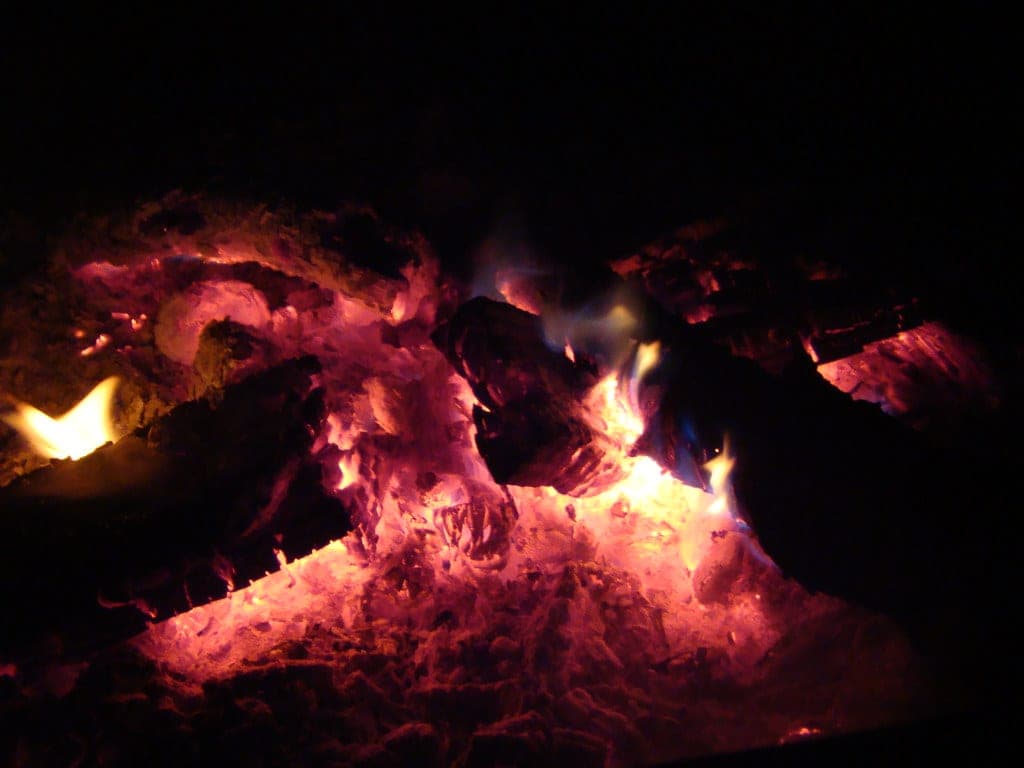
Fire restrictions and campfires: how the rules actually work
Photo by VasenkaPhotography · flickr · CC BY 2.0
- Section
- Guides
- Category
- Planning
- Read
- 4 min
- Updated
- 27 Aug 2026
Fire danger ratings, declared fire periods and total fire bans are three different things, and knowing which one applies decides whether you can light a fire tonight.
Three separate things get confused constantly, and confusing them is how people end up with a fine or, worse, starting something.
The three concepts
Fire danger ratings describe predicted conditions for a district on a given day, on a scale running from Moderate through High, Extreme and Catastrophic. It is a warning about how a fire would behave if one started. It is information, not law.
A declared fire period is a season, not a day. Each state declares a period, by district, during which fire restrictions apply continuously: things like requiring a permit to light a fire, or prohibiting certain activities outright. The dates move each year with conditions, and they differ between districts within a state.
A total fire ban is a legal prohibition for a specific district on a specific day. During a ban, no open fire may be lit in the open air. This overrides everything, including your careful fireplace, your clearing, and your bucket of water.
The practical hierarchy: the ban is the one that decides whether you can light a fire today. The declared period decides what the baseline rules are. The rating is the warning that tells you a ban is likely.
What a total fire ban prohibits
Broadly, any fire in the open air. That includes campfires, solid fuel barbecues, wood-fired ovens, and incinerators.
Gas is the grey area and it varies by state, which is exactly why it needs checking rather than assuming. Some jurisdictions permit a gas appliance during a ban under conditions such as a cleared area of a few metres, the appliance being under direct supervision, and water being available. Others prohibit it outright.
Do not carry an assumption across a border. This is one of the genuinely useful things to look up when you cross into a new state.
Where fires are prohibited regardless
Separate from any ban, some places simply do not permit solid fuel fires at all, at any time of year:
- Many national parks, particularly in alpine areas and in Tasmania, prohibit wood fires year round.
- Some reserves and conservation areas allow fuel stoves only.
- Above certain altitudes in alpine parks, fires are commonly banned to protect slow-growing vegetation.
- Areas recovering from fire are closed to fires while regenerating.
The park or forest's own rules are the source here, and they sit on top of whatever the state has declared.
Firewood
Collecting firewood is not automatically permitted either.
Many national parks prohibit collection entirely. Fallen timber is habitat for a large number of species, and in heavily used areas it gets stripped bare within a season.
State forests often permit collection for immediate use in reasonable quantities, with restrictions.
Where collection is prohibited, you bring your own. Buying it near where you are camping rather than carting it across the country helps limit the movement of pests and pathogens, which is a real problem with firewood.
Never cut standing timber, alive or dead. Standing dead trees are among the most valuable habitat in a forest.
If you do light one
Use an existing fireplace where one exists, rather than making a new scar.
Clear the ground a few metres around it, down to bare earth.
Keep it small. A cooking fire does not need to be a bonfire, and small fires are far easier to control and to extinguish properly.
Never leave it unattended, at any size.
Put it out properly. Water, stir, water again, until it is cold to the touch. Coals stay hot for many hours and can reignite or start a ground fire in root systems. Soil alone is not enough; it insulates rather than extinguishes.
Take the rubbish out. Cans, bottles and foil do not burn, and a fire pit full of half-burnt rubbish is how a good site gets closed.
The habit worth building
Check the fire district you are actually in, every morning.
Districts are large and a day's driving can move you across two or three of them. The ban that applied where you woke up may not be the one that applies where you are camping, and vice versa.
Every state fire authority publishes bans and ratings daily on a website and an app, and they are broadcast on radio. It takes a minute.
The wider point
Fire restrictions in Australia are strict because the consequences are severe and because a large proportion of ignitions are human. The rules are not bureaucratic caution.
If you are relying on a fire for cooking, carry a gas stove as a backup, because the day you cannot light a fire will happen. The camp cooking setup is covered in building a camp kitchen you will actually use.
The state-by-state camping guides, including how fire periods work in each, start at free camping in Australia: how it actually works.
Common questions
- Can you have a campfire in Australia?
- It depends on where you are and what has been declared that day. Outside declared fire periods, campfires are generally permitted in state forests and many reserves in a proper fireplace. Inside a declared fire period the rules tighten considerably, and on a total fire ban day all open fires are prohibited regardless of precautions.
- What is the difference between a fire danger rating and a total fire ban?
- The rating describes predicted conditions and is a warning. A total fire ban is a legal prohibition declared for a district for a specific day. You can have a high rating without a ban, though bans are usually declared on the worst days. The ban is the one that determines what is legal.
- Can you use a gas stove during a total fire ban?
- Sometimes, and the rules vary by state, so this needs checking locally rather than assuming. Some jurisdictions permit gas appliances during a total fire ban under specific conditions such as a cleared area around them and someone present. Others prohibit them. Solid fuel is prohibited everywhere during a ban.
- How do you find out if there is a total fire ban?
- Each state's fire authority publishes bans daily by district, on their website and app, and they are broadcast on radio. Check the district you are actually in each morning rather than the one you left, because districts are large and a drive can move you between them.
- Can you collect firewood when camping?
- Not everywhere. Many national parks prohibit firewood collection entirely, and some state forests restrict it. Fallen timber is habitat, and in heavily used areas it is stripped out completely. Where collection is prohibited you must bring your own, and buying it locally rather than transporting it long distances helps limit pest spread.
Related
 Guides
5 min read
UHF radio channels in Australia: the ones that matter
Which channels are legally reserved, which ones convoys and road trains actually use, and why a UHF is not a substitute for a satellite messenger.
 Guides
4 min read
Water: how much to carry, and how to treat what you find
The one resource where running short changes from inconvenient to dangerous, and the arithmetic is not complicated.
 Guides
3 min read
Communications beyond mobile coverage
What actually works when the bars disappear, and why a mobile phone is not a safety plan.