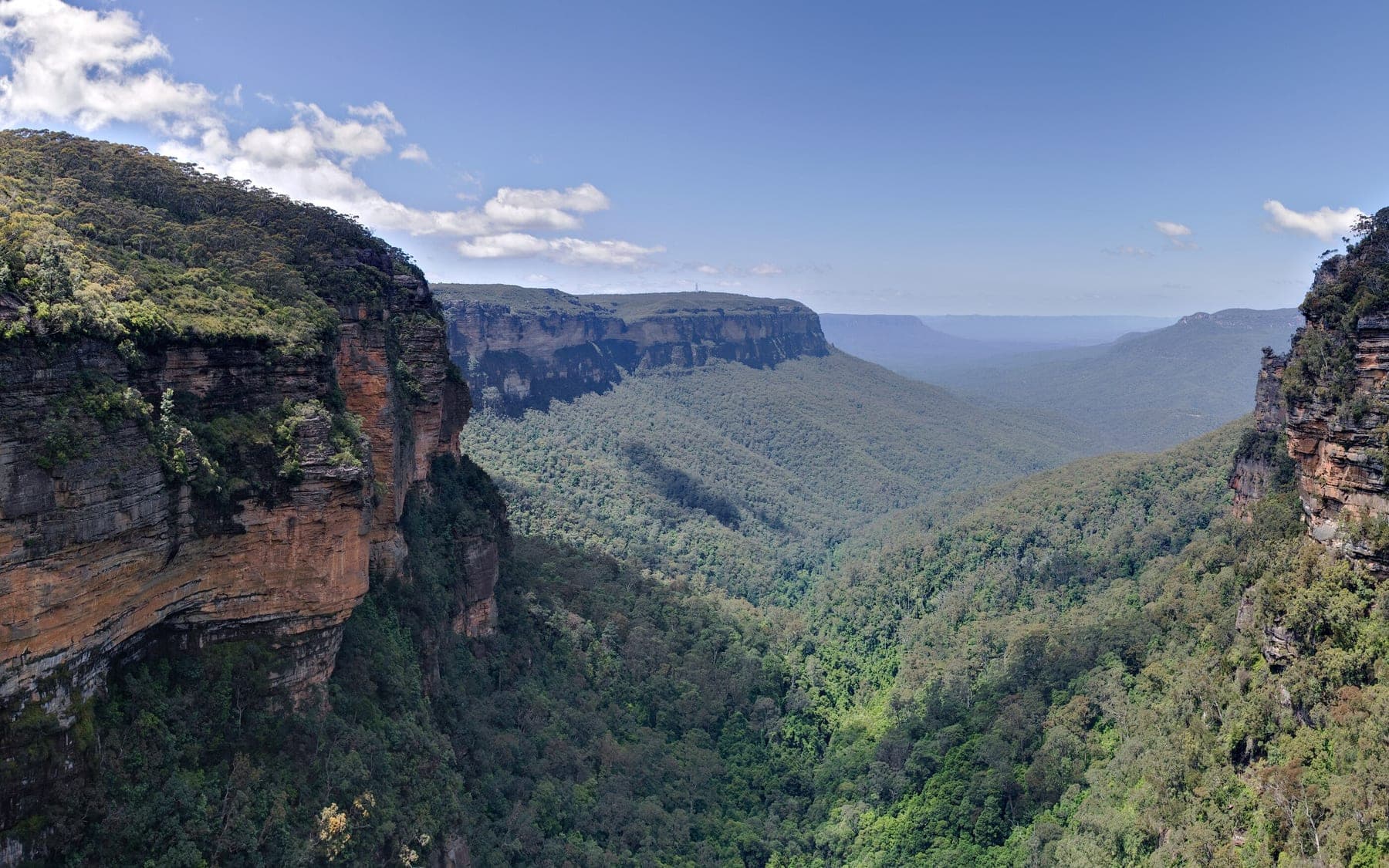
Free camping in New South Wales
Photo by Diliff · Wikimedia Commons · CC BY-SA 3.0
- Section
- Guides
- Category
- Planning
- Read
- 4 min
- Updated
- 27 Aug 2026
How NSW splits between paid national parks, free state forest and council rest areas, and why the park pass question matters more here than anywhere else.
New South Wales is the state where the free-versus-paid distinction is sharpest, and where people most often arrive with the wrong expectation. The national park system here is extensive, well-run and almost entirely user-pays. The free camping exists, but it is mostly somewhere else.
The three tiers
National parks are managed by NSW National Parks and Wildlife Service. Camping nearly always requires a booking and a per-person fee, and this holds even at basic sites with a drop toilet and nothing else. Many parks also charge a daily vehicle entry fee, which is separate from camping.
This catches people out because in some other states a remote park campsite with no facilities is free or nearly so. In NSW it is booked and paid.
State forests are managed by Forestry Corporation of NSW and are where most genuinely free camping happens. Many forests permit camping, some at designated sites and some dispersed along forest roads. Dogs are generally permitted, unlike in national parks.
The catch is variability. Rules differ forest by forest, some are closed to camping entirely, and active logging coupes and fire recovery areas close and reopen regularly. Checking the specific forest is not optional here.
Council land and rest areas covers the third tier: highway rest areas, showgrounds, sportsgrounds and riverside reserves that councils allow travellers to use. Some are free, many charge a few dollars through an honesty box, and an increasing number require self-containment.
The annual pass question
This comes up constantly and the answer is usually misunderstood.
The NSW national parks annual pass covers vehicle entry fees. It does not cover camping fees. Those are separate charges and you pay them regardless.
Whether it is worth buying depends on which parks you actually visit. A number of the most popular parks charge daily vehicle entry, and if you are in and out of those regularly the pass pays for itself fast. Plenty of other parks have no entry fee at all, in which case the pass buys you nothing.
Work out which parks you will actually visit before buying, not after.
Where the free camping is
The Northern Rivers and mid-north coast hinterland holds substantial state forest within reach of the coast, which matters because the coastal strip itself is expensive and heavily managed.
The New England and Northern Tablelands have extensive forest with high-altitude camping that stays cool through summer, and gets genuinely cold in winter.
The Riverina and the Murray have long stretches of river reserve camping, much of it free, heavily used over summer.
The far west, out through Broken Hill and the Darling, is where NSW stops feeling like NSW. Distances are large, services are sparse, and this is remote travel rather than a weekend.
The south coast and Snowy hinterland mixes forest and park, with the park side almost entirely paid.
Rules that bite in NSW
Fire restrictions are declared by the Rural Fire Service by district, with a Bush Fire Danger Period running roughly October to March and varying by area and year. Total Fire Bans are declared daily and override everything.
Solid fuel fires are prohibited outright in some parks and forests year round, regardless of the day's rating. Check the specific area.
Time limits at rest areas are signposted and enforced, mostly to prevent semi-permanent occupation.
Self-containment requirements are spreading through council sites in NSW the same way they are elsewhere. If you have no toilet on board, your options are narrower than the maps suggest.
Practical planning
State forest camping means no facilities: no water, no toilet, no bin. Carry water and enough of it, per water: how much to carry, and carry the means to deal with waste.
Coverage through the forest country and the far west ranges from patchy to none. Communications beyond mobile coverage covers the options that actually work.
Most main forest roads are manageable in a two-wheel drive with clearance in dry conditions. The better spots along the river flats and the ridge tracks want four-wheel drive, and after rain the clay-based roads become difficult quickly.
The honest summary
Budget for national parks and use state forests for free camping. The pass covers entry, not camping. Check the individual forest rather than assuming, because NSW varies more forest to forest than Victoria does.
The general national rules are in free camping in Australia: how it actually works, and the Victorian comparison is in free camping in Victoria.
Common questions
- Is free camping legal in NSW?
- In designated areas, yes. NSW state forests permit camping at no cost in many areas, a large number of council-managed rest areas and showgrounds allow low-cost or free overnight stays, and some Crown reserves permit camping. National park camping in NSW almost always carries a fee and requires booking, even at basic sites.
- Do NSW national parks charge for camping?
- Yes, in almost all cases, and NSW is stricter about this than several other states. Nearly all national park campgrounds require an advance booking and a per-person fee, including remote sites with no facilities. Vehicle entry fees apply separately at many parks, which is what the annual pass covers.
- Is the NSW national parks annual pass worth it?
- It depends entirely on which parks you visit. The pass covers vehicle entry fees, not camping fees, which is the most common misunderstanding. If you regularly visit parks that charge daily vehicle entry, it pays for itself quickly. If you mostly camp in state forest or visit parks without entry fees, it does nothing for you.
- Can you camp in NSW state forests for free?
- In many of them, yes. Forestry Corporation of NSW permits camping in a large number of state forests, some at designated sites and some dispersed. Rules vary by forest and some are closed to camping entirely, so check the specific forest rather than assuming. Active logging areas and fire recovery zones close regularly.
- Can you sleep in your car at a NSW rest area?
- Generally yes. NSW rest areas on major highways exist for driver fatigue management and overnight stops are permitted, with signposted time limits commonly around 20 hours. Setting up a full camp with awning and chairs is treated differently from sleeping in the vehicle at many sites.
Related
 Guides
4 min read
Free camping in Tasmania
A small state with a lot of free camping, a parks pass you almost certainly need, and weather that is the real planning constraint.
 Guides
4 min read
Free camping in Victoria
Where free camping is genuinely permitted in Victoria, which agency manages what, and the rules that differ from every other state.
 Guides
4 min read
Free camping in Australia: how it actually works
What counts as free camping, where it is genuinely permitted, and the rules that catch people out before the fine does.