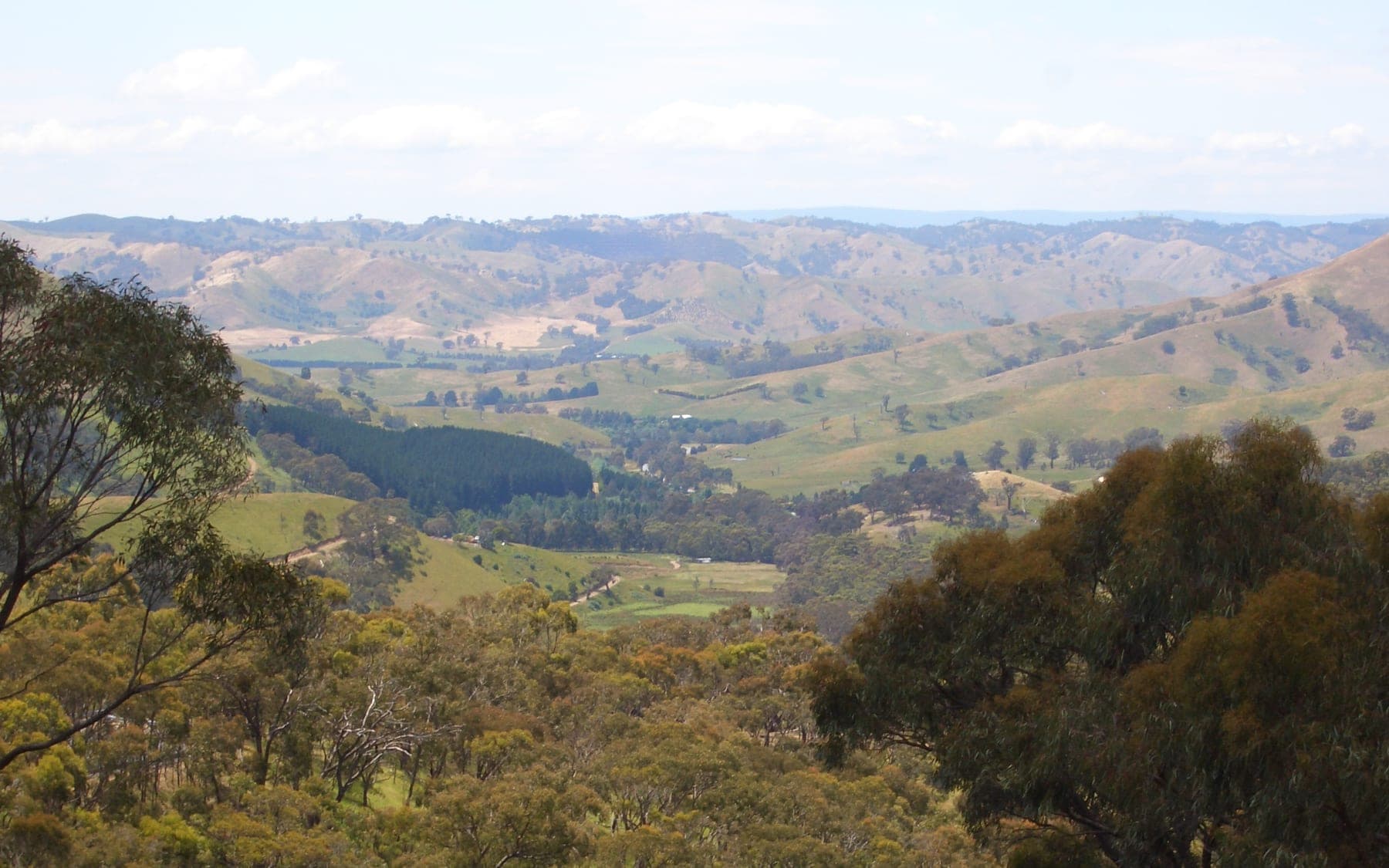
Free camping in Victoria
Photo by Ausnindo · Wikimedia Commons · CC BY-SA 4.0
- Section
- Guides
- Category
- Planning
- Read
- 4 min
- Updated
- 27 Aug 2026
Where free camping is genuinely permitted in Victoria, which agency manages what, and the rules that differ from every other state.
Victoria has more legally free camping than most people expect, and the reason is a quirk of land tenure rather than generosity. A very large share of the state is public land managed as state forest, and dispersed camping across state forest is permitted by default.
That single fact shapes everything about camping cheaply in this state.
State forest versus national park
If you learn one distinction about camping in Victoria, learn this one. It determines where you can go, what it costs, and what you are allowed to do when you get there.
State forest is managed for multiple uses: timber, water catchment, recreation, conservation. Dispersed camping is generally permitted at no cost, dogs are usually allowed, and campfires are permitted outside the Fire Danger Period. You do not book, you do not pay, and you find your own spot.
National parks are managed for conservation. Camping happens in designated campgrounds, almost always requires a booking, usually costs money, dogs are prohibited, and the rules on fires, generators and access are much tighter.
Both are public land. They behave completely differently, and the boundary between them is often invisible on the ground. This is the most common way people get it wrong: assuming that because they are in the bush on public land, state forest rules apply.
Where the free camping actually is
The High Country is the largest and best-known area. State forest through the north-east, around the Alpine National Park rather than in it, holds an enormous amount of dispersed camping along river flats and forest roads. Snow closes many tracks over winter and seasonal road closures are strictly enforced.
The Otways and the south-west hold state forest inland from the coast. The coastal strip itself is heavily managed and free camping along the Great Ocean Road is essentially nonexistent, which surprises people every summer.
The Wombat, Bunyip and Yarra State Forests sit within reasonable driving distance of Melbourne and take the pressure that comes with that. They are the practical option for a weekend rather than a trip.
The Murray River frontage on the Victorian side has extensive camping along river reserves, much of it free, with heavy use over summer.
The Big Desert and Wyperfeld in the north-west are genuinely remote by Victorian standards and see a fraction of the traffic.
The rules that are specific to Victoria
Stay near a formed road. Dispersed camping does not mean driving into the bush to find a spot. You are expected to camp within a short distance of an existing formed road or track, and driving off-track through the bush is prohibited.
Keep clear of watercourses. There are minimum distances for camping and for toileting near any waterway, and these matter most in exactly the spots people want to camp.
The Fire Danger Period is the big one. Victoria declares a Fire Danger Period by district, with dates that shift each year according to conditions. Inside it, the rules on campfires tighten considerably. On a declared Total Fire Ban day, all open fires are prohibited, and in Victoria that includes solid fuel barbecues.
The practical habit is to check the day's rating for the district you are actually in, every morning, rather than the one you left.
Seasonal road closures run through the High Country from roughly the Queen's Birthday weekend to the Melbourne Cup weekend, though exact dates vary. These are enforced, and driving a closed track causes real damage to a wet surface.
Some free sites now require booking. Victoria has moved a number of formerly turn-up sites to a booking system, including sites that remain free. It manages numbers over holiday periods. Check the individual site.
What you need to bring
Dispersed state forest camping means no facilities at all. No water, no toilet, no bin, frequently no defined site.
That puts the whole burden on self-sufficiency. Carry your own water and enough of it, which is covered in water: how much to carry. Carry a means of dealing with waste, and take everything out including food scraps.
Mobile coverage through the High Country and the western forests is patchy to absent. Communications beyond mobile coverage covers what actually works when the bars disappear.
Access
Most state forest camping is reachable in a two-wheel drive with reasonable clearance during the dry months, on the main forest roads. The tracks that get interesting, and the river flats that hold the best sites, generally want four-wheel drive and low tyre pressures for the corrugations. Tyre pressures for sand, gravel and rock covers the adjustment that matters most.
After rain, clay-based forest roads in Victoria become genuinely difficult, and the damage caused by driving them wet is why seasonal closures exist.
The honest summary
Victoria is one of the better states in the country for free camping, and it is almost entirely because of the state forest tenure. Learn the difference between forest and park, check the fire district every morning, camp near a formed road, carry everything you need, and take it all out again.
The general rules that apply across the country are in free camping in Australia: how it actually works.
Common questions
- Is free camping legal in Victoria?
- Yes, in the right places. Victoria has an unusually large amount of legally free camping because dispersed bush camping is permitted across most state forest, which covers a substantial area. Free camping is not permitted on beaches, in most urban areas, or in national parks, where camping is generally in designated sites with a booking and a fee.
- Can you camp anywhere in a Victorian state forest?
- Broadly yes, with conditions. Dispersed camping is allowed across most state forest, but you must stay clear of watercourses, camp within a short distance of a formed road rather than driving off into the bush, and avoid areas closed for regeneration, logging or fire recovery. Some popular areas have been converted to designated sites to manage pressure.
- What is the difference between a state forest and a national park in Victoria?
- It is the single most useful distinction for a Victorian camper. State forest is managed for multiple uses and generally permits free dispersed camping, dogs and campfires subject to restrictions. National parks are managed for conservation, camping is in designated sites that usually cost money and require booking, dogs are prohibited, and rules are much tighter.
- Do you need to book free camping in Victoria?
- Dispersed state forest camping does not require a booking. A number of designated free and low-cost sites in state forests and reserves do now require a booking through the state system, even where the site itself is free, because it manages numbers over holidays. Check the specific site before relying on turning up.
- Can you have a campfire when free camping in Victoria?
- Outside the declared Fire Danger Period, generally yes in state forest, in a properly constructed fireplace or a trench, with the area cleared around it. During the Fire Danger Period the rules tighten sharply and on Total Fire Ban days all open fires are prohibited outright. The declared period varies by district and by year.
Related
 Guides
4 min read
Free camping in New South Wales
How NSW splits between paid national parks, free state forest and council rest areas, and why the park pass question matters more here than anywhere else.
 Guides
4 min read
Free camping in Australia: how it actually works
What counts as free camping, where it is genuinely permitted, and the rules that catch people out before the fine does.
 Guides
4 min read
Free camping in Queensland
The state with the most generous council camping and the strictest national park booking system, plus the crocodile line that changes how you camp.