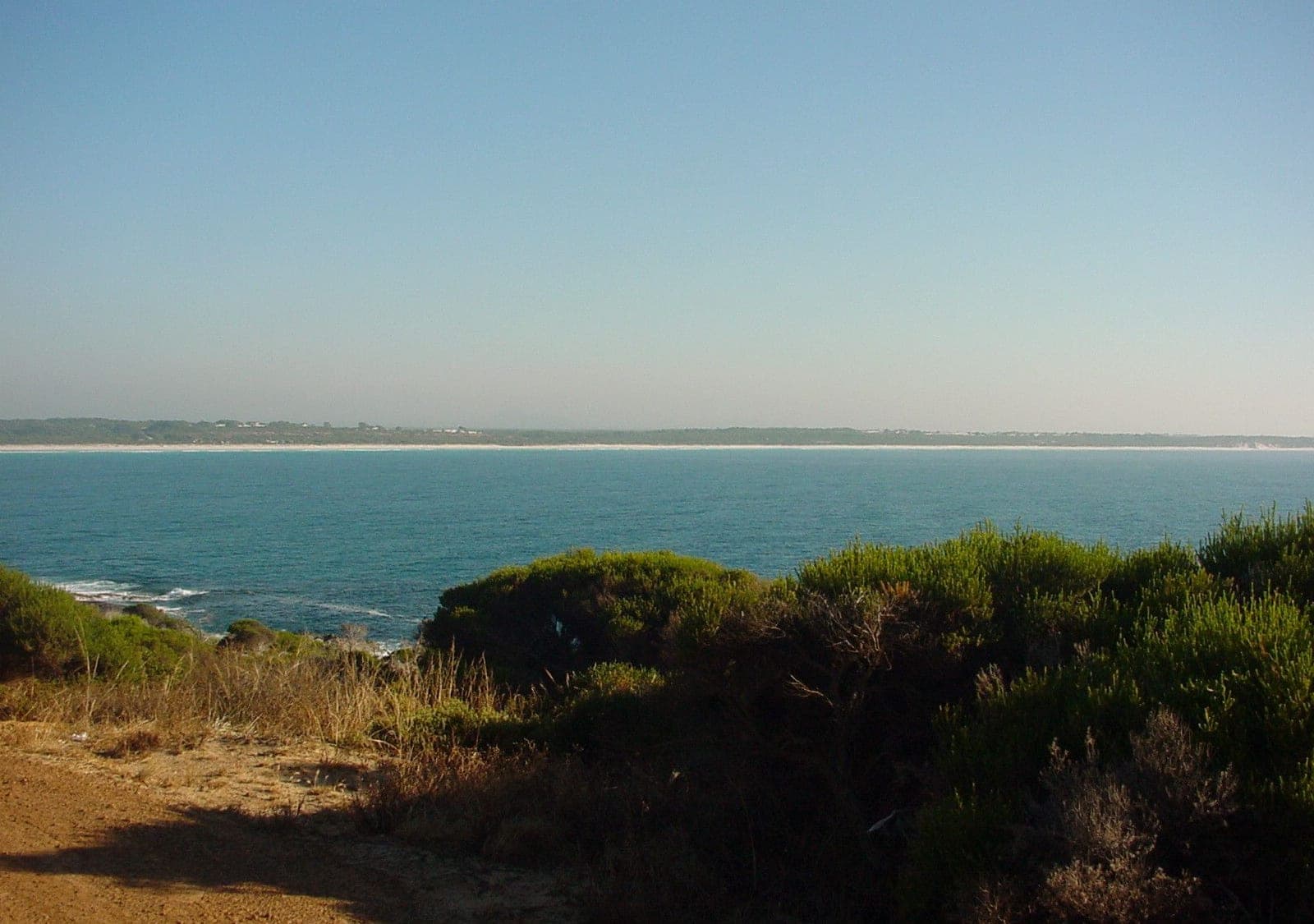
Free camping in Western Australia
Photo by Unknown authorUnknown author · Wikimedia Commons · Public domain
- Section
- Guides
- Category
- Planning
- Read
- 4 min
- Updated
- 27 Aug 2026
The largest state, the longest distances, and a camping system where the constraint is not permission but fuel, water and how far apart everything is.
Western Australia covers about a third of the continent, and camping here is shaped less by rules than by distance. The permission question is usually straightforward. The logistics question is the hard one.
The tenure picture
Roadside rest areas run along the major highways and permit overnight stops. On the long inland routes these are frequently the only option for a hundred kilometres or more, and they range from a gravel bay to a shaded area with a toilet.
Council free camps exist through the agricultural regions and the mid-west, often in or beside towns.
Pastoral station stays are one of the better options in WA and are frequently overlooked. Working stations across the Gascoyne, Murchison and Pilbara open camping areas for a modest fee, often on river frontage, and they are a considerably better experience than a highway rest area.
National parks are managed by the state parks service. Vehicle entry fees apply at many parks, camping fees are separate, and popular coastal parks book out months ahead through winter.
Unallocated Crown land covers vast areas, and while camping on it is often tolerated, it is not the same as permitted, and it comes with no facilities and no help.
The park pass question
WA charges vehicle entry at a large number of its parks, more consistently than some other states, and for anyone doing a genuine WA trip the pass arithmetic is usually favourable.
The important distinction, same as everywhere: the pass covers vehicle entry, not camping. Camping fees are charged on top and popular sites still need booking.
For a four-week trip up the coast taking in the major parks, a holiday pass generally pays for itself well before the end.
Distance is the real constraint
This is what separates WA from the eastern states, and it is the thing that turns a mistake into an emergency.
Fuel gaps of 300 to 500 kilometres are normal on inland routes. Some roadhouses keep limited hours, some run out, and some are closed when you arrive. The working assumption should be that you can reach the stop after the one you are aiming for.
Prices climb sharply the further you get from Perth, and that is freight rather than opportunism.
Water is not reliably available, and where it exists it is often bore water: hot, heavily mineralised and unpleasant. Plan bore water as washing water and carry your drinking supply. Water: how much to carry covers the numbers.
Distances between towns mean a breakdown is a genuinely serious event rather than an inconvenience. Traffic on some routes is light enough that you may wait a long time.
Coverage is limited to towns and does not extend far beyond them. A satellite messenger is standard equipment rather than an accessory here, as covered in communications beyond mobile coverage.
The two seasons
The north, meaning the Kimberley and Pilbara, is dry season country from roughly May to October. Outside that window the wet brings flooding, road closures and extreme heat, and the Gibb River Road closes entirely. That route is covered in the Gibb River Road.
The south west is far more forgiving. Winter is genuinely wet and cool, spring brings the wildflowers the region is known for, and summer is hot and dry rather than dangerous.
The mid-west and Gascoyne sit between the two, with winter being the comfortable season and summer being severe.
The practical consequence is that a WA trip is usually planned around being in the north during the dry, which is also when everyone else is there.
Where it is worth going
The coral coast north from Geraldton takes in Kalbarri, Shark Bay and Ningaloo, and the parks along it are the most heavily booked in the state. Cape Range National Park is the standout.
The Pilbara inland holds Karijini, which is the finest gorge country in the state.
The Kimberley across the top is the most remote and most rewarding, and the most season-constrained.
The Goldfields and the inland routes east are long, empty and genuinely remote.
The south west is the accessible corner: forest, coast, wineries, and a road network that does not demand much of a vehicle.
Vehicle preparation
Distances and corrugations are hard on vehicles in WA in a way they are not in the eastern states. Two spare tyres is conventional advice on the northern unsealed routes rather than cautious, and corrugation damage is usually a speed problem before it is anything else. Tyre pressures for sand, gravel and rock covers the adjustment that prevents most of it.
Weight discipline matters more here too, because you are carrying more water and more fuel over rougher ground for longer. GVM upgrades explained covers what that does to a vehicle's limits.
The honest summary
Permission is rarely the hard part in WA. Range is. Plan fuel and water conservatively, buy the park pass if you are doing the coast, look seriously at station stays, and travel the north in the dry.
The general rules are in free camping in Australia: how it actually works.
Common questions
- Is free camping legal in Western Australia?
- In designated areas, yes. WA has roadside rest areas along the highways where overnight stops are permitted, a number of council-provided free camps, and some pastoral station stays for a small fee. National parks are managed by the state parks service and camping there requires a fee and usually a booking.
- Do you need a park pass in Western Australia?
- For vehicle entry to national parks, yes, and WA charges vehicle entry at a large number of its parks. Passes are available by the day, for four weeks, or annually. The pass covers entry only; camping fees are charged separately on top. For a long trip through WA, the four-week or annual pass usually pays for itself quickly.
- How far apart is fuel in outback Western Australia?
- Long enough that it drives trip planning. Gaps of 300 to 500 kilometres between fuel stops are normal on the inland routes, and some roadhouses keep limited hours or run out. Plan range on the assumption that one stop will be closed or dry, and carry enough to reach the one after it.
- When is the best time to camp in Western Australia?
- It depends which half. The north, including the Kimberley and Pilbara, is dry season country from roughly May to October. The south west is comfortable most of the year, with wildflowers through spring and a genuine wet winter. Summer in the north is dangerous rather than merely hot.
- Can you camp on beaches in Western Australia?
- In some places, yes, but most coastal camping is in managed reserves or on pastoral leases with a fee rather than free-for-all beach camping. Many popular coastal spots are now formalised with a caretaker and a nightly charge, largely because informal camping damaged them.
Related
 Guides
4 min read
Free camping in Australia: how it actually works
What counts as free camping, where it is genuinely permitted, and the rules that catch people out before the fine does.
 Guides
4 min read
Free camping in New South Wales
How NSW splits between paid national parks, free state forest and council rest areas, and why the park pass question matters more here than anywhere else.
 Guides
4 min read
Free camping in Queensland
The state with the most generous council camping and the strictest national park booking system, plus the crocodile line that changes how you camp.